Patented & proven solutions
Damp? Musty? Humid? Get a dry, healthy crawl space today!
Get a free estimate
Before & After Photos
Click on a photo to enlarge.
Sump Pump Installation in Troy, SC Basement


Sump pumps are often a pretty common product whether we are doing a basement or a crawlspace project. Sump pumps are where the water drains to, and where the pump is located that pumps the water outside of the home. This homeowner decided to go with a SuperSump pump system, which is probably the most popular of the sump systems that we install.
The "before" picture shows an area in the basement that will be the location of the SuperSump. While this particular area in the basement did not have too much water intrusion or damage from it, it was the best area for the SuperSump to be installed in. Having it installed here gave it a corner that it could be tucked away in, but also in an area that a discharge pipe could be easily installed.
The "after" photo shows the same area as before, but with the SuperSump pump system installed. While it may not seem like much, this sump pump paired with the WaterGuard can effectively protect this basement from water intrusion. Our sump pumps come with a WaterWatch Alarm, which is the device almost in the center of the pump. This alarm will notify you if the water has risen above where the pumps should be running. This gives the homeowner enough time to address the problem before the water overflows. There are several great parts to our sump pumps and if you'd like to learn more, click here.
Greenwood, SC Basement is Saved by CleanSpace and SuperSump

As you can see by the look of it, this Greenwood, South Carolina basement was having more than its fair share of water issues. Water would often pour through the walls and wash over the floors leaving it stained and messy. When our Design Specialist saw this he was not surprised. Many basements have water issues. The difference that separates this one from those is what you choose to do about those problems.
Take a look at our “after” photo. The idea behind the sump and the CleanSpace is to collect the water from the walls and distribute it away from the home. To do this, our Design Specialist installed our signature CleanSpace liner. It’s a 20mils thick liner that is nearly impossible to rip or tear. The pump is our patented SuperSump placed in the lowest point of the basement to collect the water as it flows to the low point. The CleanSpace actually helps direct that water to the pump, keeping out of the main floor of the basement.
WaterGuard installed in Greenwood, SC Basement


To fix the water intrusion of the basement, our team added WaterGuard. WaterGuard is like a French drain although it is installed inside of the home. This interior form of waterproofing is more likely to resist clogging with silt or plant roots. WaterGuard catches wall and floor seepages before it reaches the floor in its drainage pipe where it is then sent to the sump pump. This basement also had a SuperSump pump installed so that the water from the WaterGuard could be drained from the basement.
In the before pictures you see the basement without any waterproofing products in the floor. But in the after picture you can see where the WaterGuard has been added to the basement and covered with cement for a hidden waterproofing method. You can see the flood check port in the lot right hand of the photo.
Greenwood, SC Home Receives WaterGuard After Water Inches in Through the Walls


Large, full basements aren’t exceptions to the moisture rule. Even homes that have, in the beginning, shown no signs of water intrusion often end up a casualty in the war on water. It’s unfortunate, but not uncommon. That is the problem this Greenwood, South Carolina homeowner had when they decided to give All-Dry of the Carolinas a call.
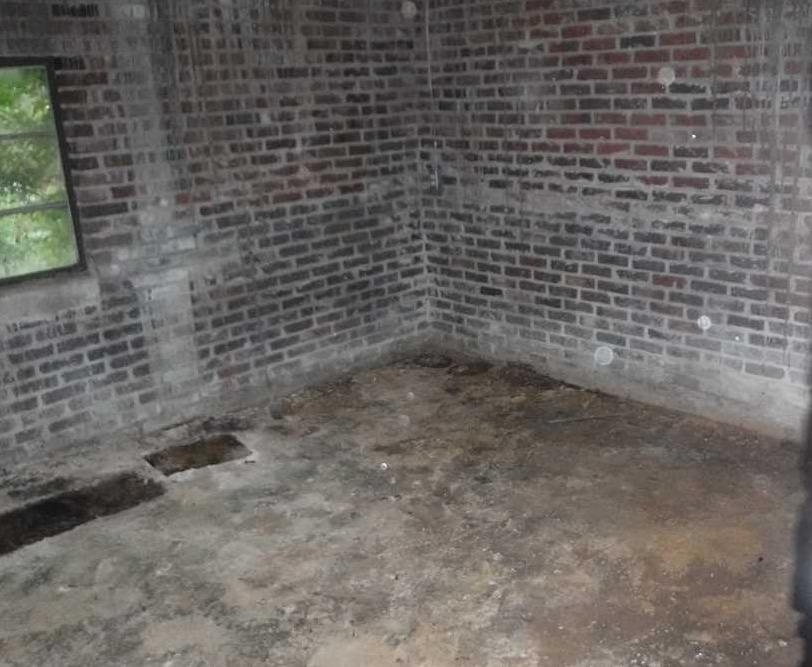
If we take a look at the ‘after’ photo, we see evidence that water has come and gone. There’s discoloration on the floor, which, by itself is not only unsightly, but it’s also evidence of a much larger problem. What would happen to the floors during a flood?
In the ‘before’ photo, we have completely solved this issue. Notice the dark outline against the floor. That’s where we have installed our patented WaterGuard system and covered it with cement. In the photo, it has yet to dry, but when it does not even the homeowner will be able to tell the difference.
Our WaterGuard sits against the wall and captures the water as it passes through the walls down to the floor. It’s inserted and then hidden from view. It doesn’t sit in the dirt and so, there is no way it could clog or be filled with debris. There are small notches (or teeth) in the WaterGuard that allow nothing but water to pass into it. Once it captures this water, the water is then directed to one of our patented sump pumps and swiftly sent away from the home.
The space has hardly been changed at all.
Outdoor Drain Installation in Woodruff, SC


This business was having some pretty serious issues with drainage from their building's downspouts. The water was getting into the business' basement, as well as beginning to cause foundation issues. In order to help the owner out, we installed some downspout extensions, as well as install a drain that ran all the way to the sewer drain.
The "before" picture shows the area that the drain will later be installed. As of now, the water has a path to the drain, but it isn't a very direct, or easy path to follow, which is especially important in heavier rains/flash flooding. Between the drain that will be installed here and the downspout extensions, this business owner won't have to worry about water standing around the foundation.
The "after" photo is a much different story than before, showing the same area but with the drain that runs directly to the sewer. Having this direct path to the sewer is so helpful, especially with the downspout extensions that go straight into a drain that connects with the one "seen" in the picture. This means that all of the water coming in from the roof and gutters is running straight into this drain. This means that the water is not just sitting on the structure's foundation, leading to further issues.
